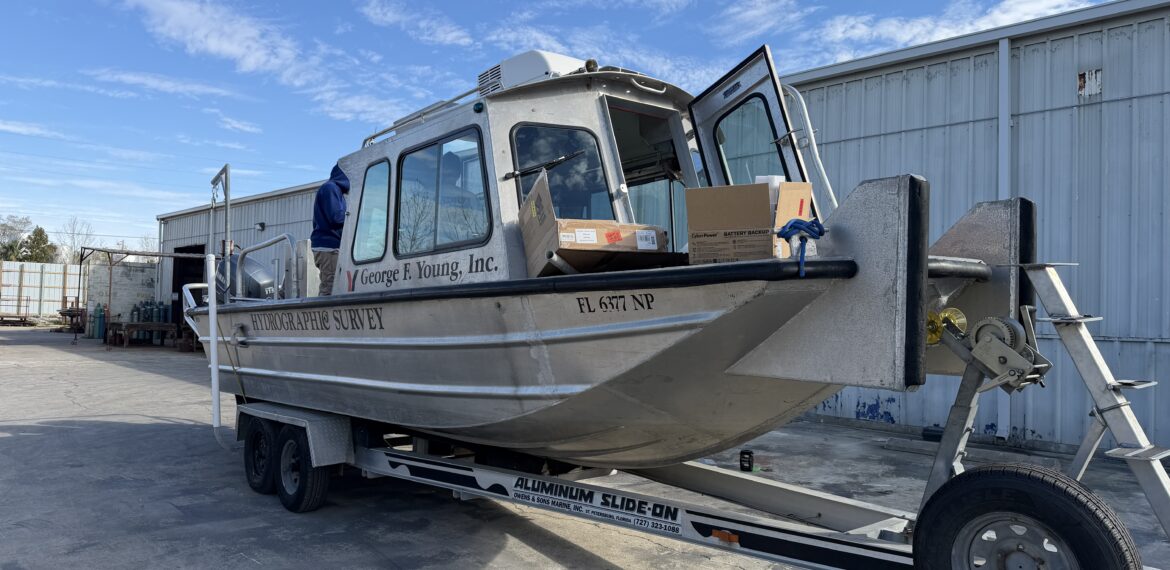
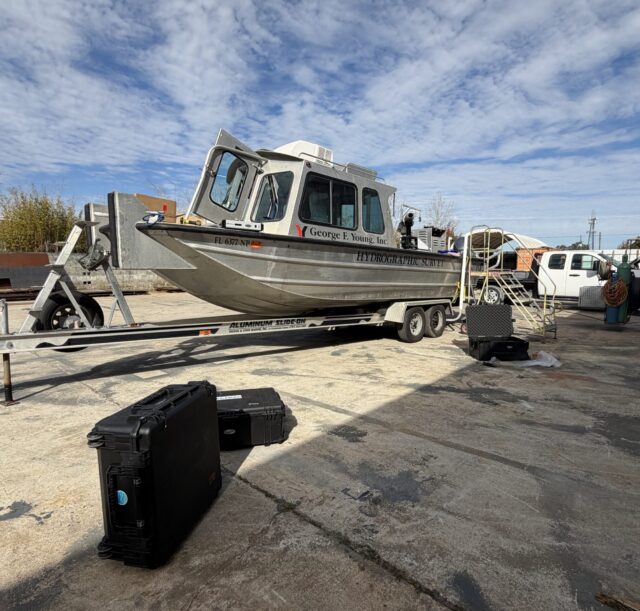
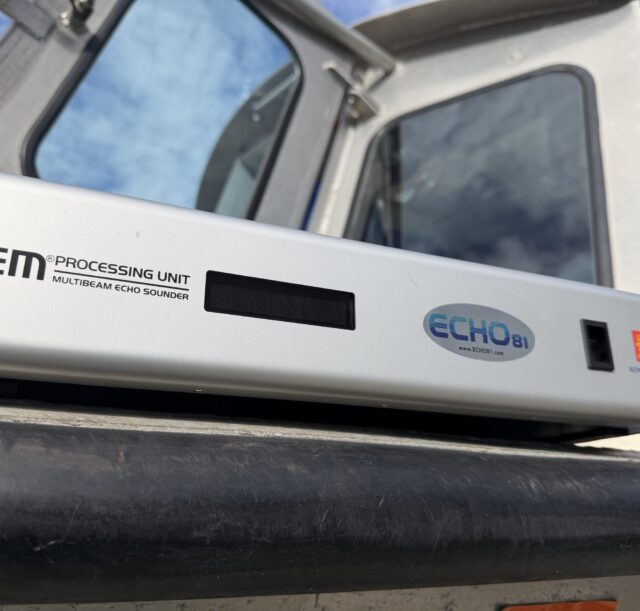
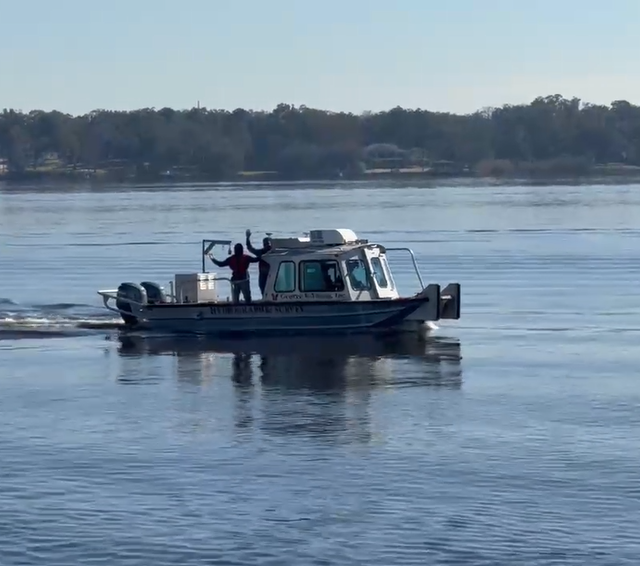
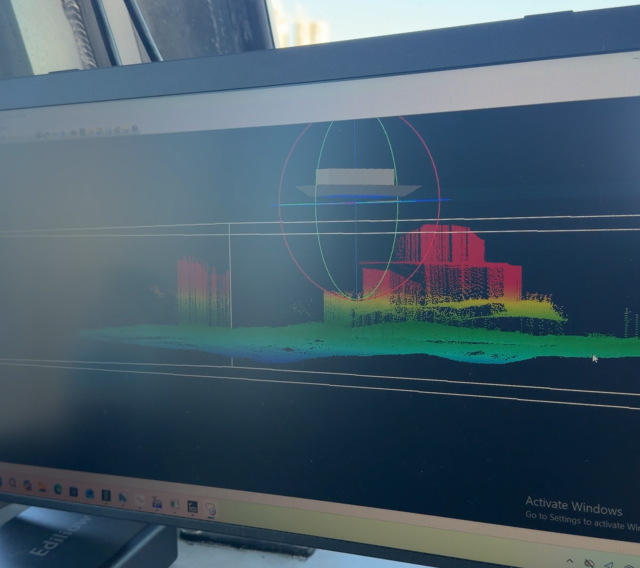
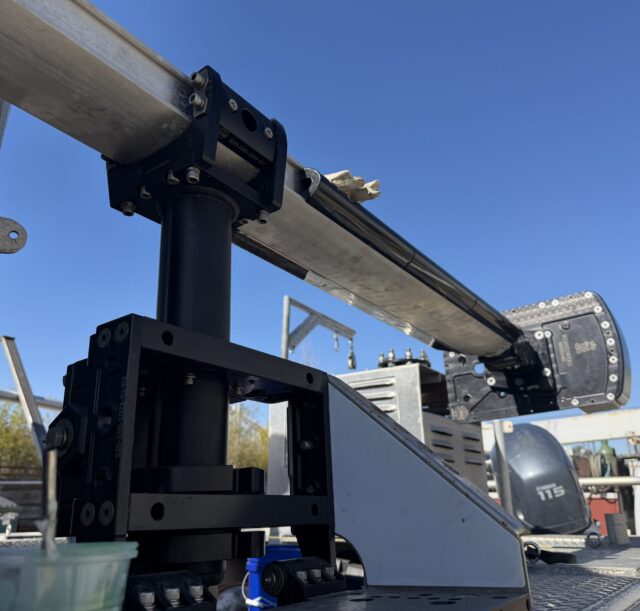
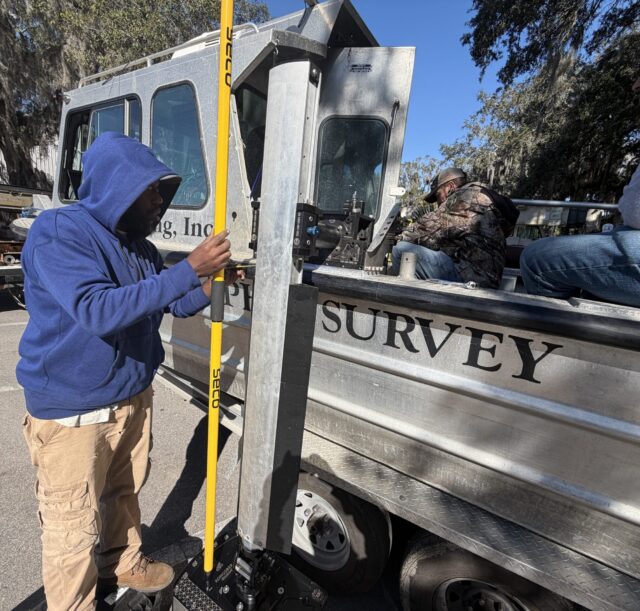
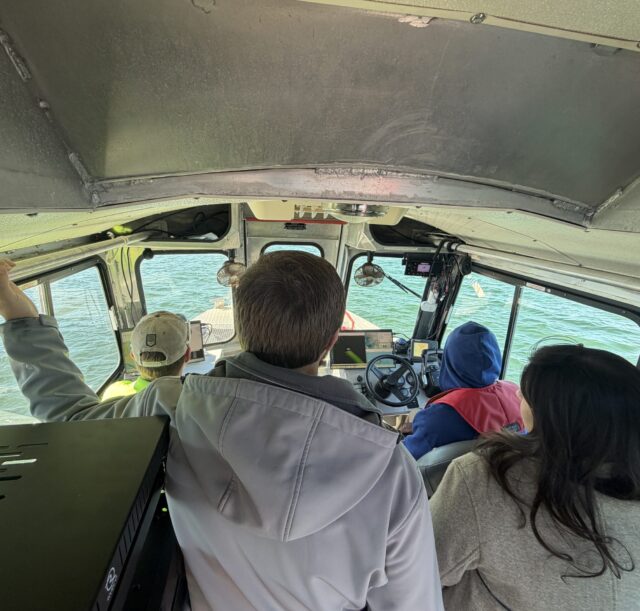
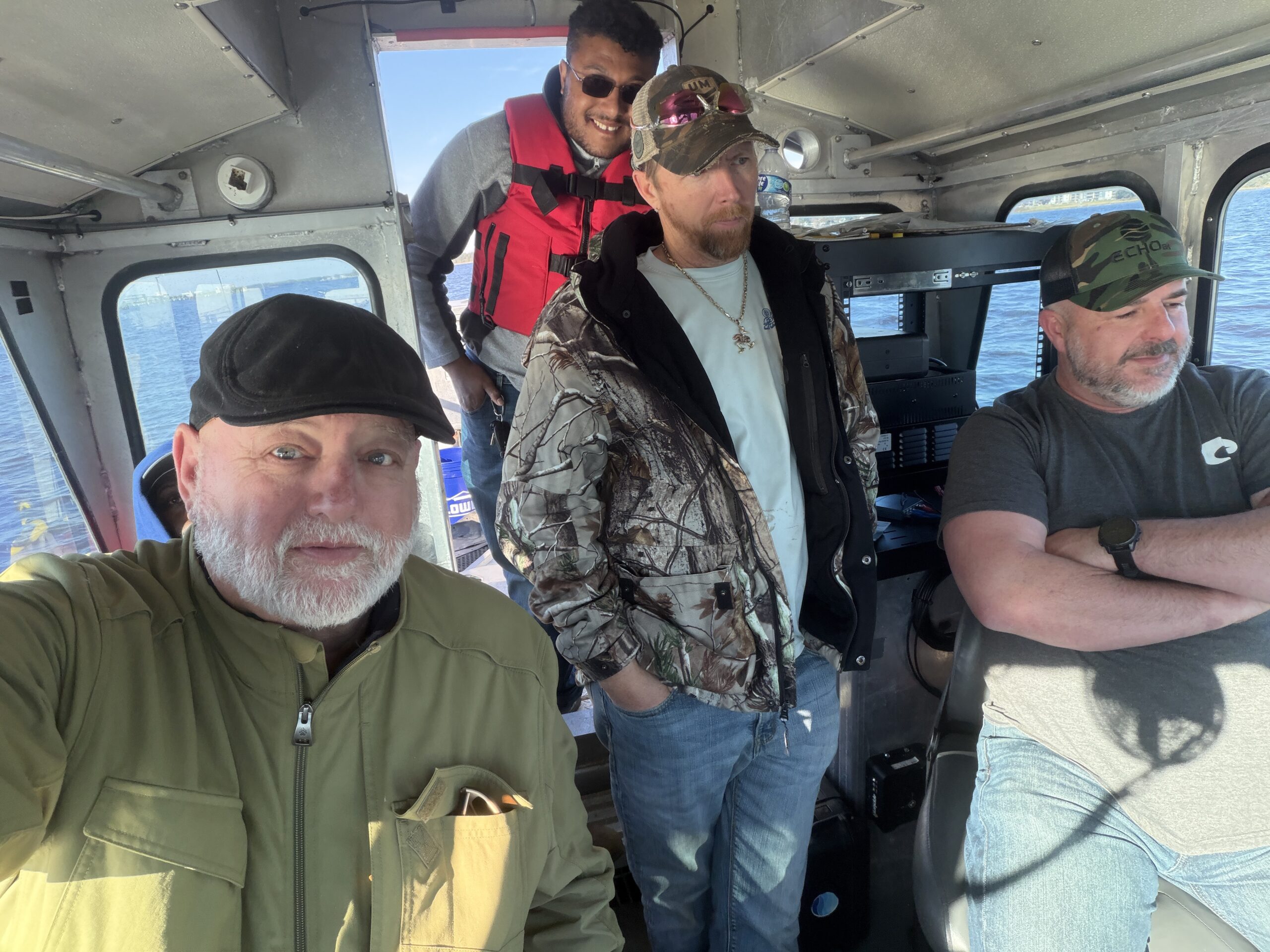
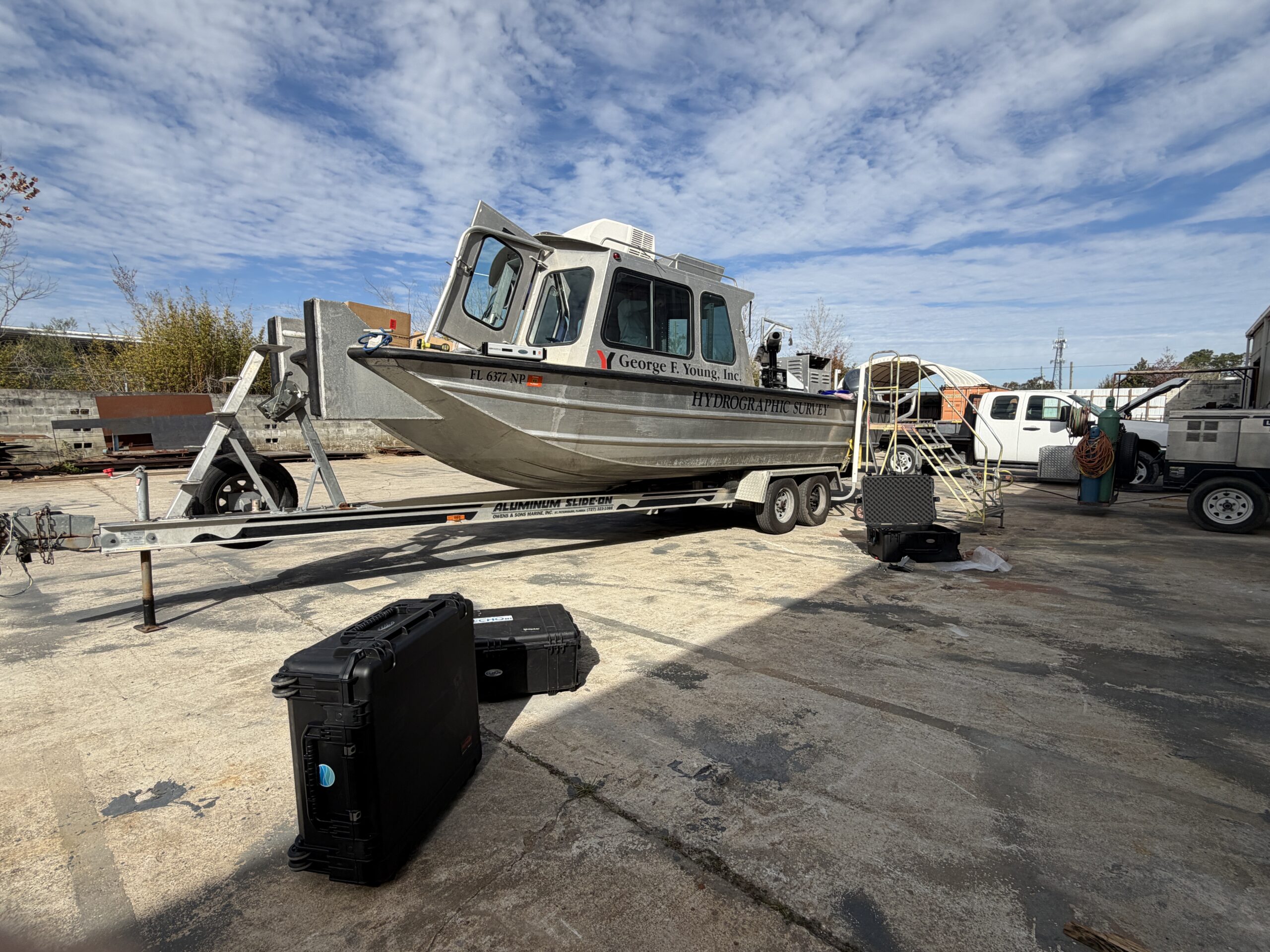
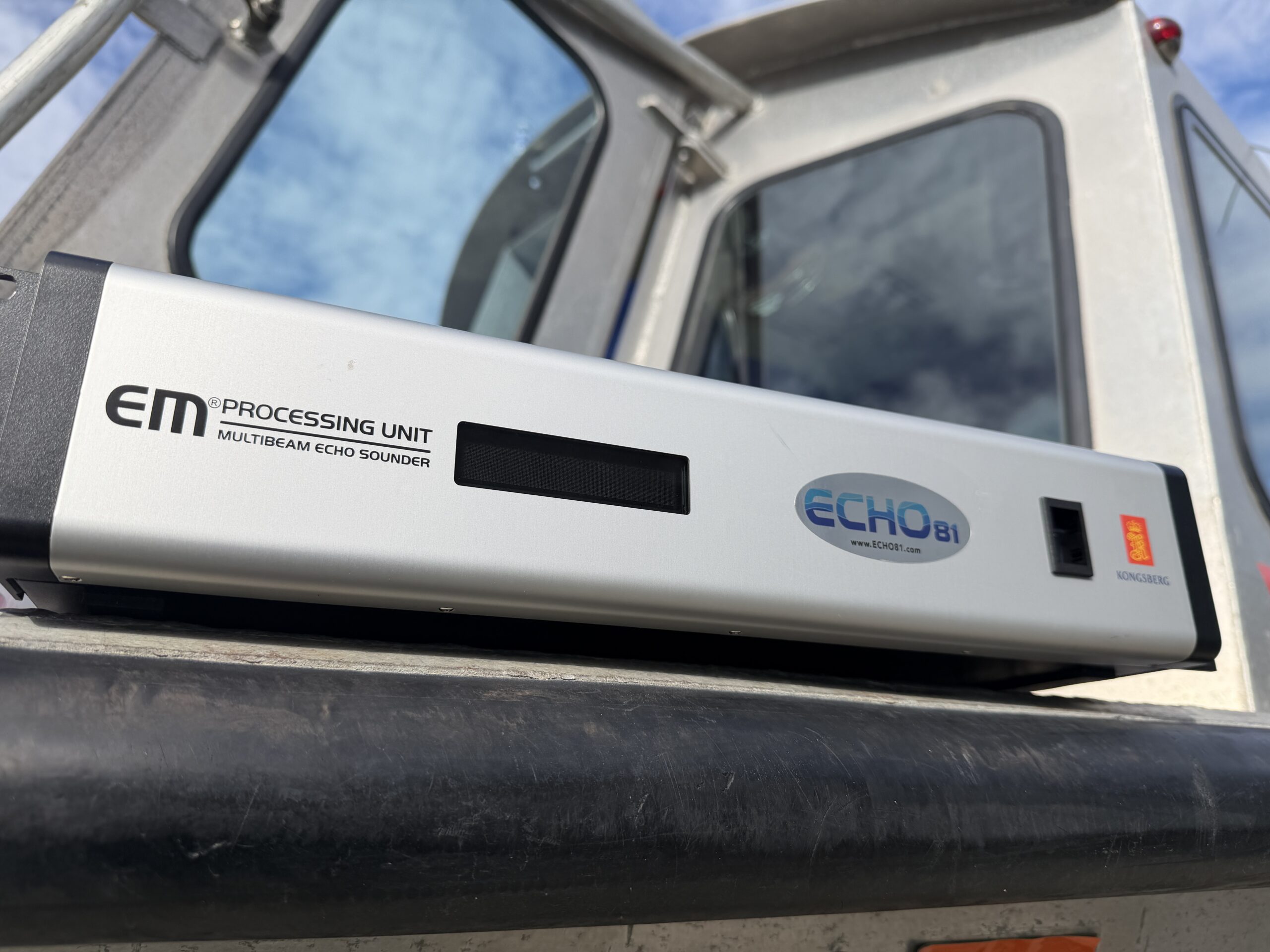
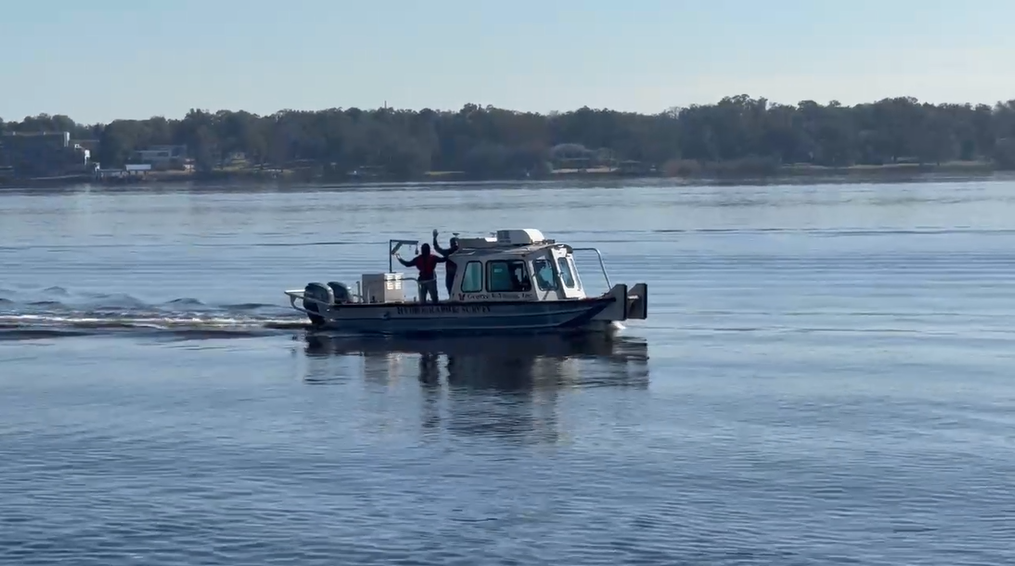
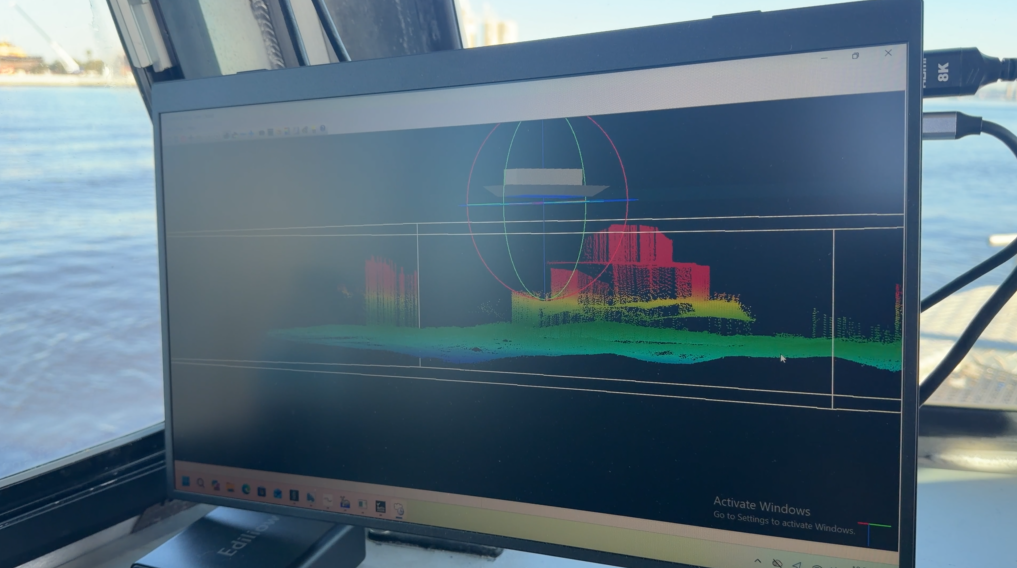
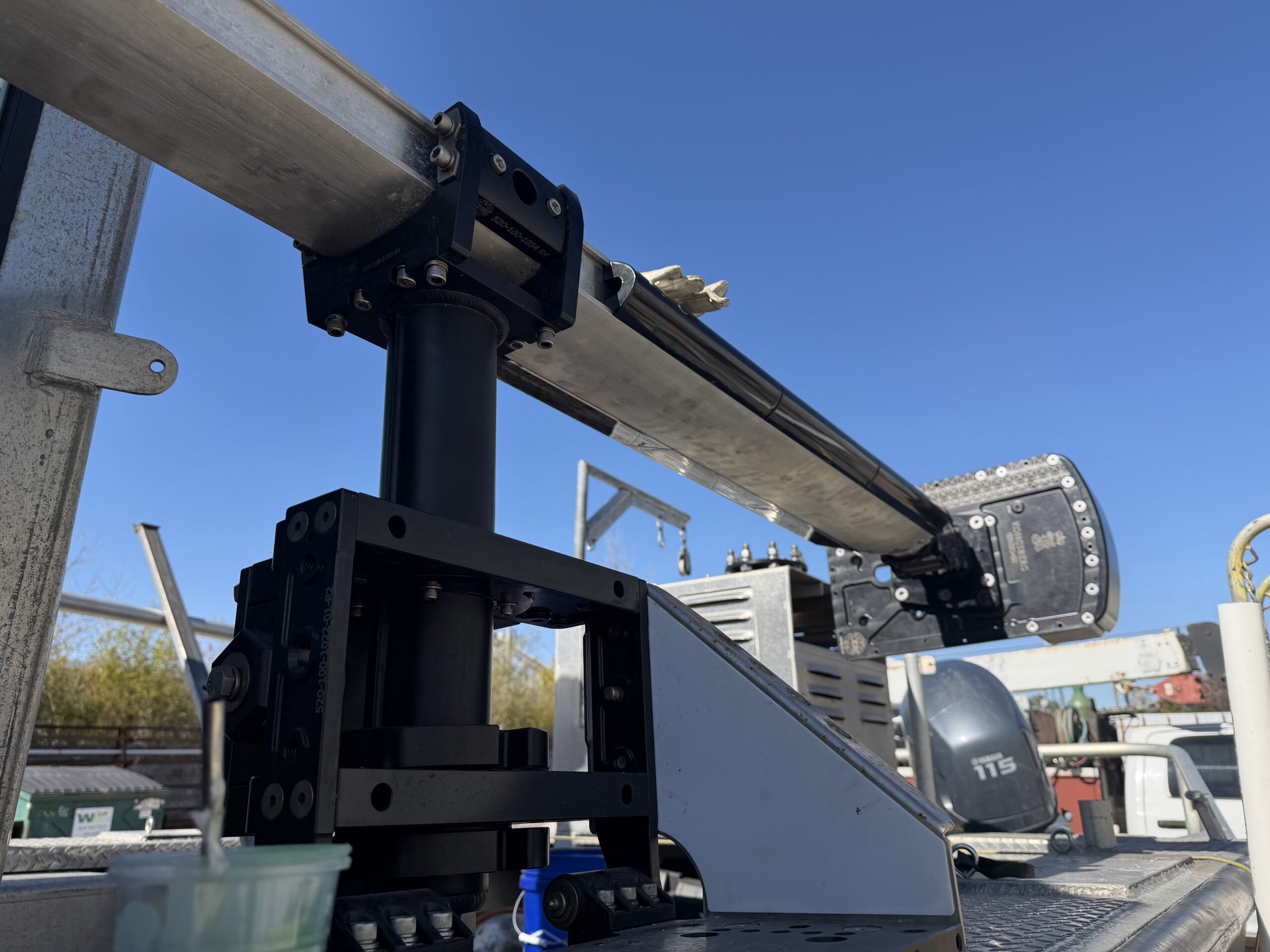
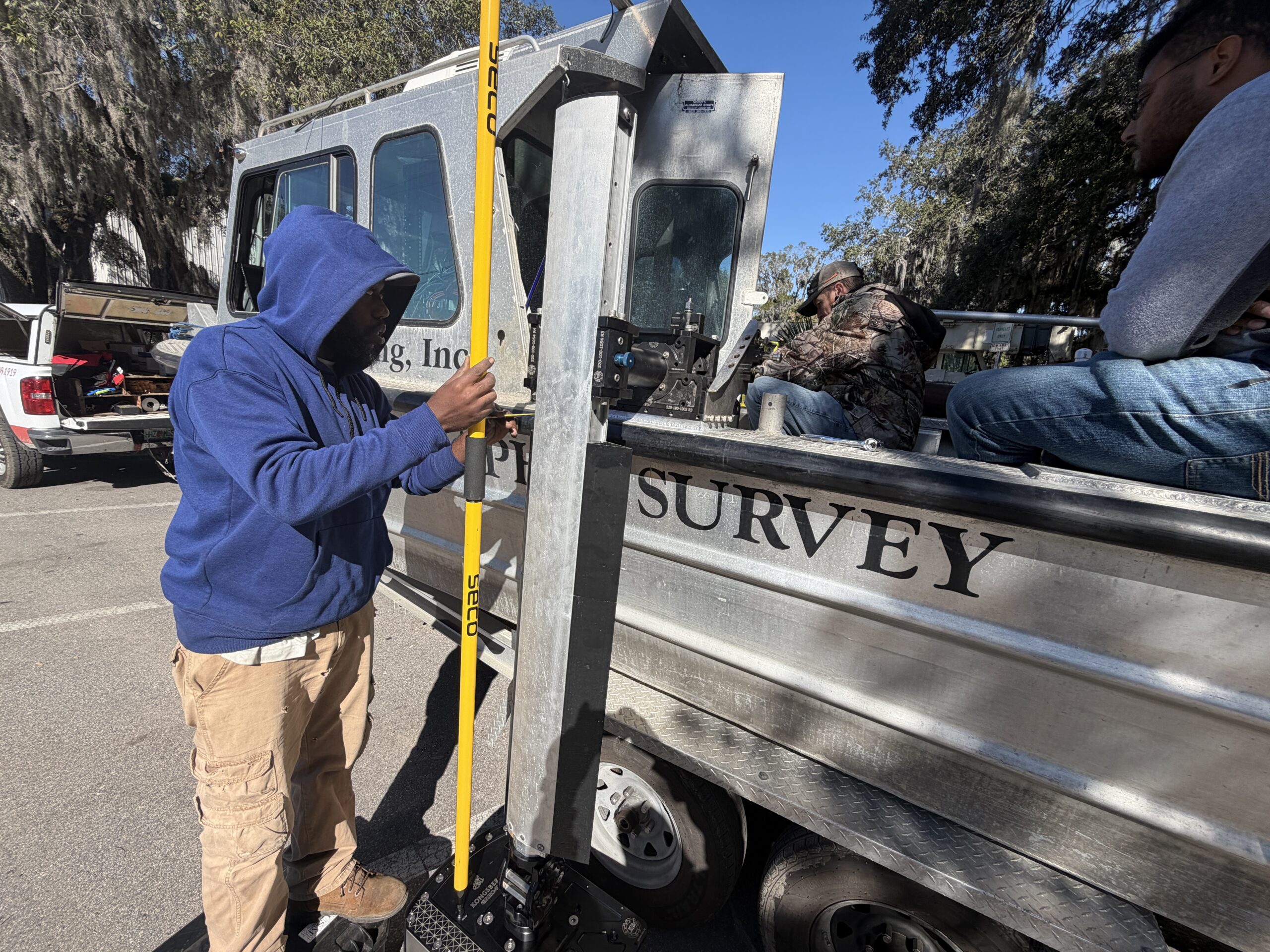
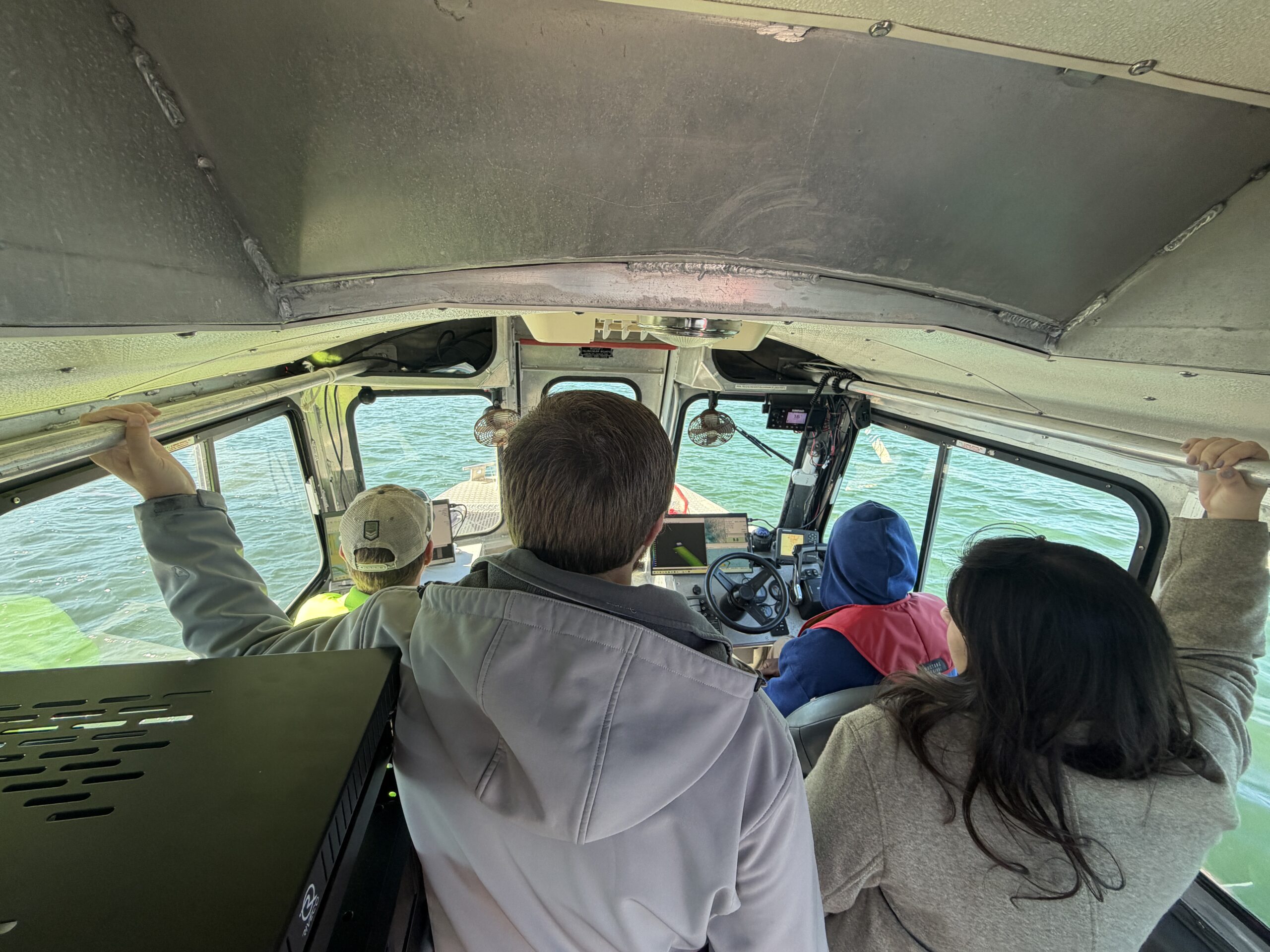
George F. Young’s hydrographic survey team is expanding its capabilities with the recent installation and successful sea trials of the innovative Kongsberg EM 2042 multibeam echosounder. This advanced equipment will provide high-density, high-resolution data for shallow water seabed mapping, further enhancing our services.
The acquisition and installation of the Kongsberg EM 2042 were made possible with the support of ECHO 81, a U.S.–based provider of hydrographic, geophysical, and subsea survey equipment.
Richard Sawyer, PSM, CH, who leads our hydro team, highlights that the Kongsberg EM 2042 excels in shallow-water multibeam surveying due to its superior data quality, stability, and productivity. Its three-sector transmit architecture allows operators greater control over acoustic energy distribution, enabling true yaw, roll, and pitch stabilization. This results in cleaner outer beams and more consistent data across wider swaths – even on small or dynamic platforms such as survey launches and USVs. By managing data quality at the point of transmission, the EM 2042 reduces noise, increases usable coverage, and minimizes the need for post-processing.
By actively steering and stabilizing multiple transmit sectors, the EM2042 delivers:
True yaw, roll, and pitch stabilization, keeping data clean even on small vessels or in dynamic sea states
Consistent, high-quality outer beams, allowing wider usable swaths with less noise
Superior control of insonification, resulting in more uniform coverage and stronger bottom detection
High-sounding density and wide swath capability, without sacrificing reliability
Excellent performance on USVs, survey launches, and fast-moving platforms
Unlike systems that rely primarily on receive-side correction, the EM 2042 manages data quality during transmission. This approach reduces artifacts, improves edge-of-swath performance, and minimizes post-processing cleanup, resulting in more usable data, higher productivity, and greater confidence in challenging conditions – exactly what modern hydrographic operations demand.
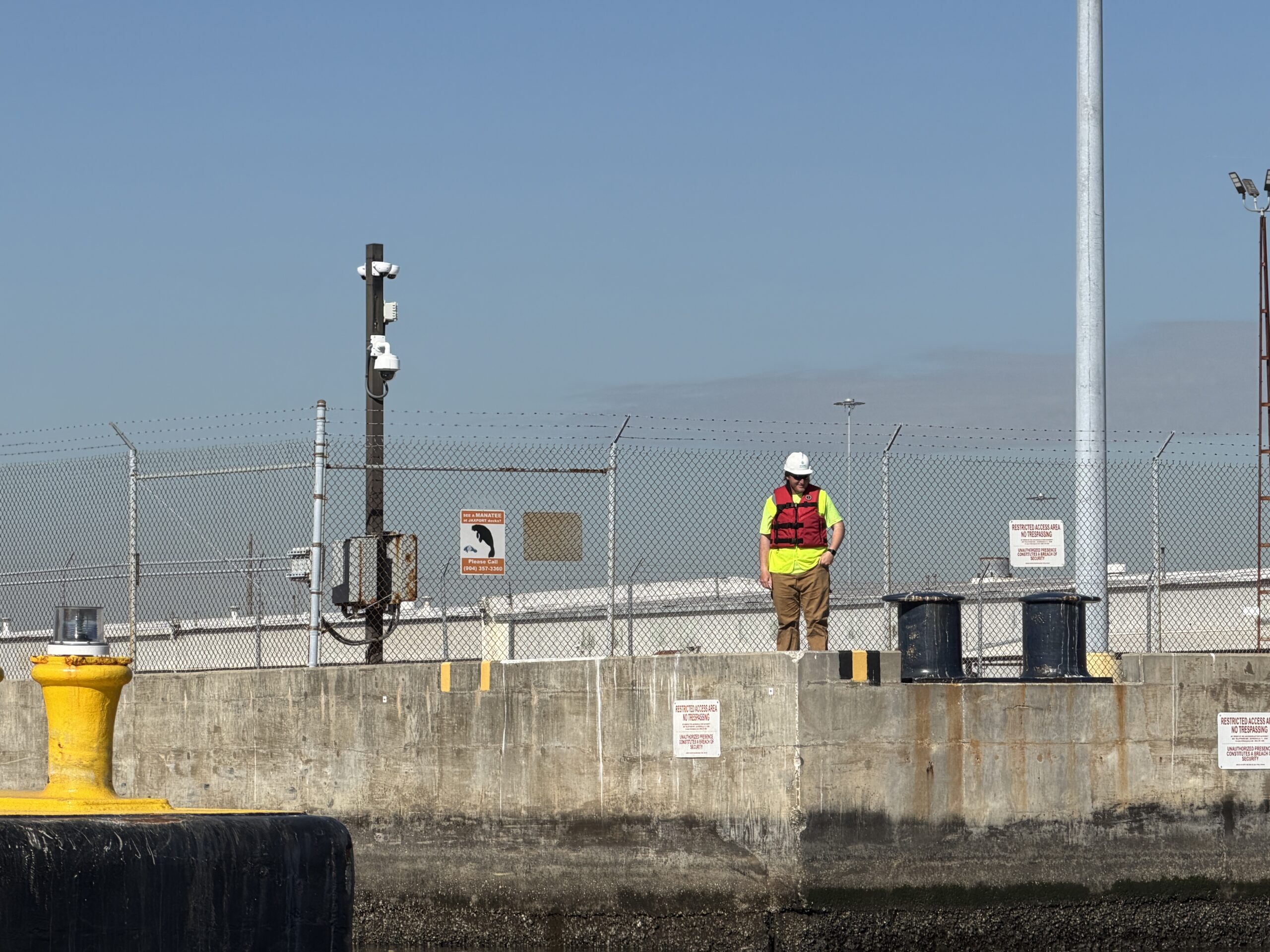
The system was installed in Jacksonville, FL, with sea trials and calibrations completed in both Jacksonville and St. Petersburg, FL.
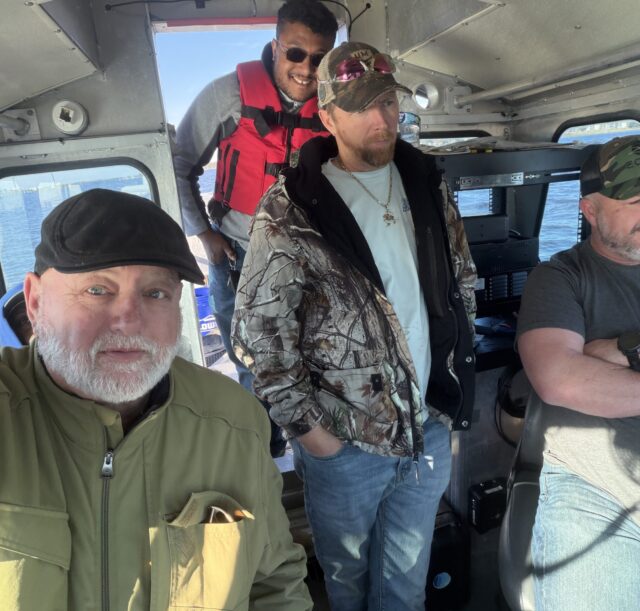
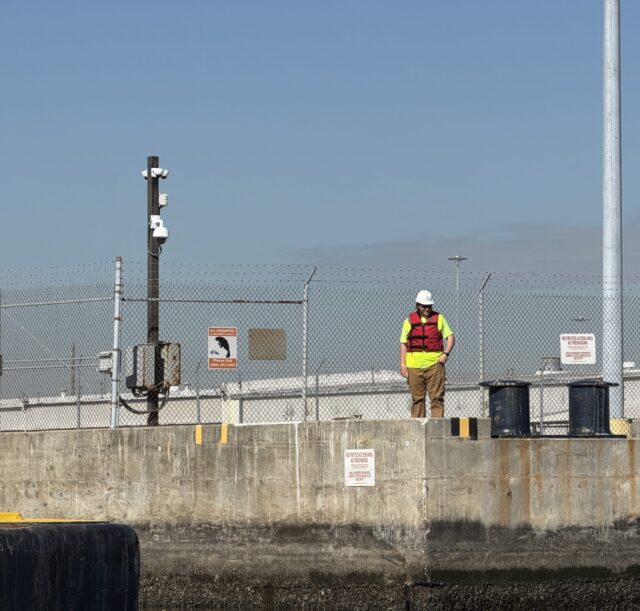
We extend our gratitude to our dedicated Jacksonville team members for leading us into the future:
Rick Sawyer, PSM, CH – Vice President Hydrographic Survey
John Maffett, PSM – Vice President Land Survey, Jacksonville